Custom Birding, Butterflying, and Natural History Tours
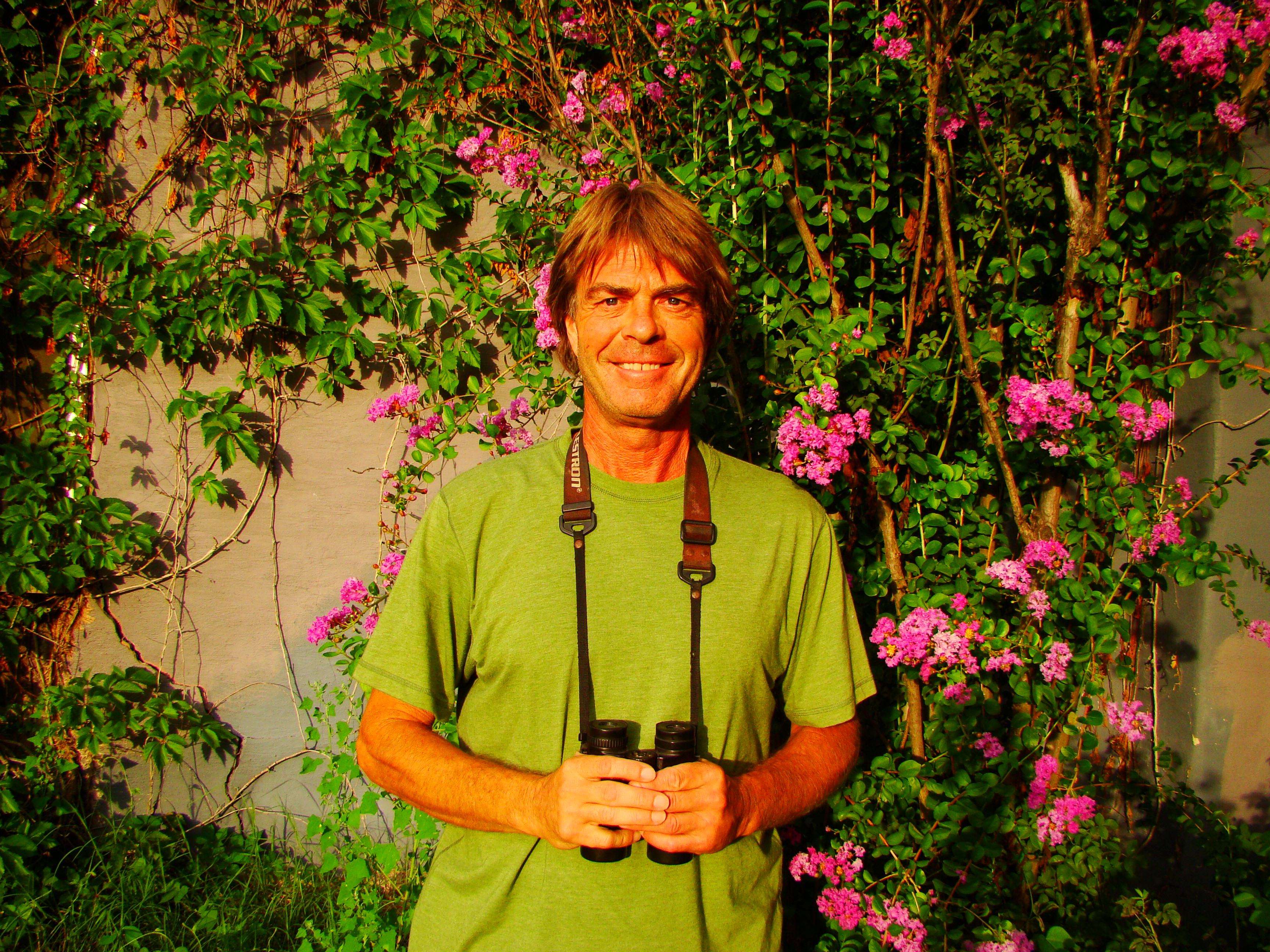
The Patagonia Birding & Butterfly Co. is a small, local, bird and butterfly tour company based in Patagonia, Arizona and owned and operated by Matt Brown, Patagonia resident since 1998. Matt has taken hundreds of birders, butterfliers, and nature lovers around Santa Cruz and Cochise Counties over the years, either searching for "target" species or Arizona "specialties", or just attempting to rack up as many interesting things as we can find while exploring gorgeous landscapes and habitats.
Many predesigned tours are available (see HERE), either within one- or two-mile walking distance or less-than one-hour driving distance of "downtown" Patagonia. These have predetermined costs and average lengths, ranging from $30 for one person for one hour, up to $180 for a group of four for four hours. Locations include: Patagonia neighborhoods and Town Parks; The Paton Center for Hummingbirds (Tucson Audubon Society); Blue Haven Road/Patagonia-Sonoita Creek Preserve (The Nature Conservancy); Patagonia Roadside Rest; Patagonia Lake State Park/Sonoita Creek State Natural Area; Santa Fe Ranch Nature Center (Nogales); Nogales neighborhoods and parks; Las Lagunas de Anza Interpretive Wetlands (Nogales); Juan Bautista deAnza Trail (Santa Cruz River from Nogales to Tubac); the Historic Canoa Ranch; and near Sierra Vista: Fort Huachuca Army installation; Ramsey Canyon Preserve (The Nature Conservancy).
Custom tours can be arranged on an hourly basis, with tour length entirely up to the client. Fees are determined by the length of the tour and the number of participants, with a "base rate" of $25/hour for one person. Prices increase by $5/hour with each additional participant, up to a If we ride in the company vehicle, a 2002 Honda CR-V, a mileage fee will be added on, but if we ride in yours, there won't be.
There is always a 'scope available to bring stuff in closer, and I always have field guides, water, and snack-type food items with me. Extra binoculars can be arranged if you don't have any with you.
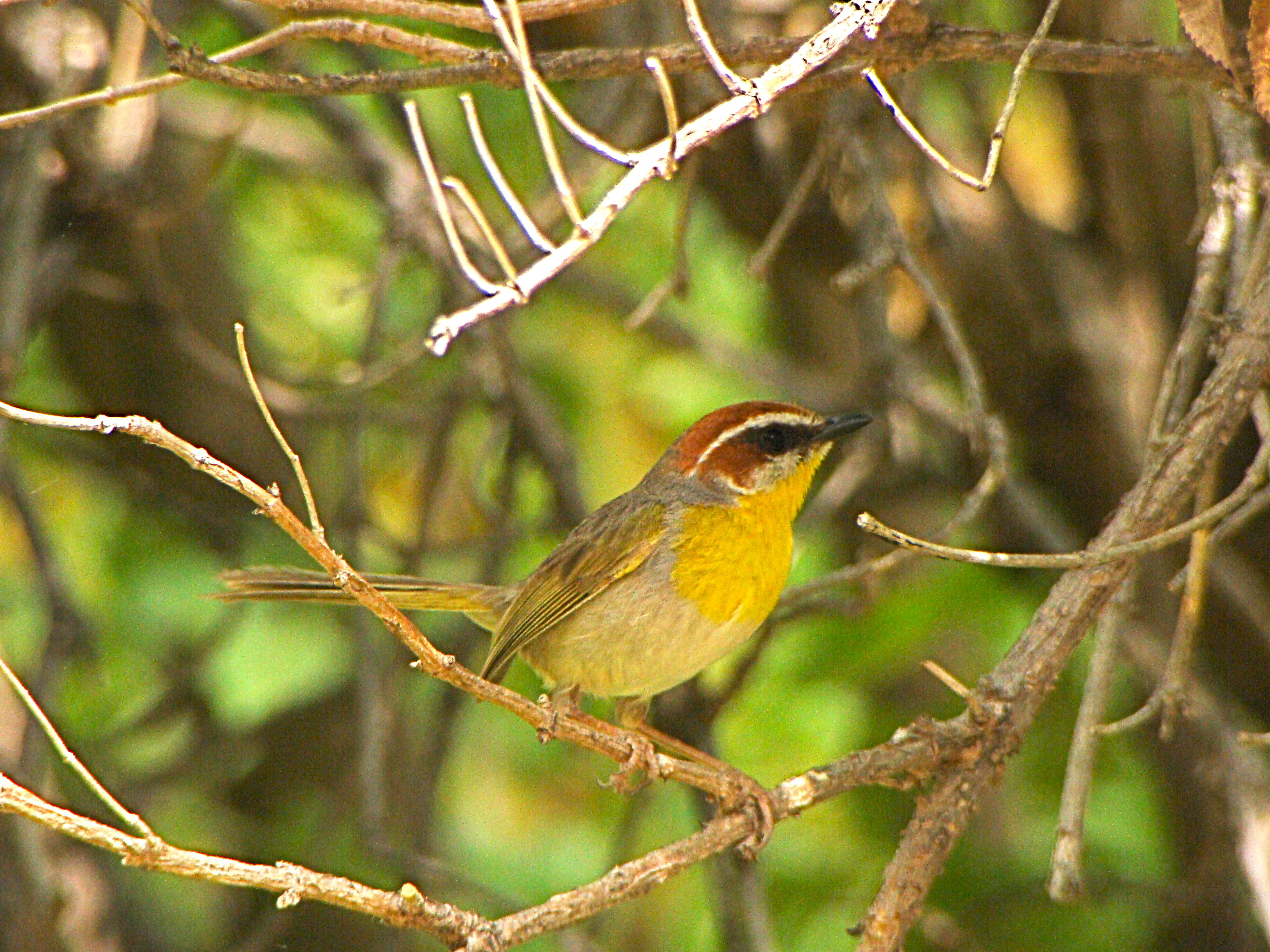
Rufous-capped Warbler at Patagonia-Sonoita Creek Preserve
 The Patagonia Birding & Butterfly Co. is a small, local, bird and butterfly tour company based in Patagonia, Arizona and owned and operated by Matt Brown, Patagonia resident since 1998. Matt has taken hundreds of birders, butterfliers, and nature lovers around Santa Cruz and Cochise Counties over the years, either searching for "target" species or Arizona "specialties", or just attempting to rack up as many interesting things as we can find while exploring gorgeous landscapes and habitats.
Many predesigned tours are available (see HERE), either within one- or two-mile walking distance or less-than one-hour driving distance of "downtown" Patagonia. These have predetermined costs and average lengths, ranging from $30 for one person for one hour, up to $180 for a group of four for four hours. Locations include: Patagonia neighborhoods and Town Parks; The Paton Center for Hummingbirds (Tucson Audubon Society); Blue Haven Road/Patagonia-Sonoita Creek Preserve (The Nature Conservancy); Patagonia Roadside Rest; Patagonia Lake State Park/Sonoita Creek State Natural Area; Santa Fe Ranch Nature Center (Nogales); Nogales neighborhoods and parks; Las Lagunas de Anza Interpretive Wetlands (Nogales); Juan Bautista deAnza Trail (Santa Cruz River from Nogales to Tubac); the Historic Canoa Ranch; and near Sierra Vista: Fort Huachuca Army installation; Ramsey Canyon Preserve (The Nature Conservancy).
Custom tours can be arranged on an hourly basis, with tour length entirely up to the client. Fees are determined by the length of the tour and the number of participants, with a "base rate" of $25/hour for one person. Prices increase by $5/hour with each additional participant, up to a If we ride in the company vehicle, a 2002 Honda CR-V, a mileage fee will be added on, but if we ride in yours, there won't be.
There is always a 'scope available to bring stuff in closer, and I always have field guides, water, and snack-type food items with me. Extra binoculars can be arranged if you don't have any with you.
The Patagonia Birding & Butterfly Co. is a small, local, bird and butterfly tour company based in Patagonia, Arizona and owned and operated by Matt Brown, Patagonia resident since 1998. Matt has taken hundreds of birders, butterfliers, and nature lovers around Santa Cruz and Cochise Counties over the years, either searching for "target" species or Arizona "specialties", or just attempting to rack up as many interesting things as we can find while exploring gorgeous landscapes and habitats.
Many predesigned tours are available (see HERE), either within one- or two-mile walking distance or less-than one-hour driving distance of "downtown" Patagonia. These have predetermined costs and average lengths, ranging from $30 for one person for one hour, up to $180 for a group of four for four hours. Locations include: Patagonia neighborhoods and Town Parks; The Paton Center for Hummingbirds (Tucson Audubon Society); Blue Haven Road/Patagonia-Sonoita Creek Preserve (The Nature Conservancy); Patagonia Roadside Rest; Patagonia Lake State Park/Sonoita Creek State Natural Area; Santa Fe Ranch Nature Center (Nogales); Nogales neighborhoods and parks; Las Lagunas de Anza Interpretive Wetlands (Nogales); Juan Bautista deAnza Trail (Santa Cruz River from Nogales to Tubac); the Historic Canoa Ranch; and near Sierra Vista: Fort Huachuca Army installation; Ramsey Canyon Preserve (The Nature Conservancy).
Custom tours can be arranged on an hourly basis, with tour length entirely up to the client. Fees are determined by the length of the tour and the number of participants, with a "base rate" of $25/hour for one person. Prices increase by $5/hour with each additional participant, up to a If we ride in the company vehicle, a 2002 Honda CR-V, a mileage fee will be added on, but if we ride in yours, there won't be.
There is always a 'scope available to bring stuff in closer, and I always have field guides, water, and snack-type food items with me. Extra binoculars can be arranged if you don't have any with you.